Product & Design Approach Overview

Consumer Obsession That Built a ₹700Cr+ Platform

From a startup to India's leading multi-service consumer ecosystem

~12-23%
Annual Design Impact on GMV
0 to 7M+
Monthly Active Users
2017-25
Case Years
Scroll

2 Stints, same company, different avatars - first principles to deliver quality healthcare services to 23M+ Consumers. Same core. Different strategic decisions.

Understand consumer behavior via mixed methods → Clear decisions for compounding returns → Enhance UX to impact GMV.
🏛️ Case 1

Family Architecture

Building switching cost moats through household management , making family the foundation, not a feature

76%
Onboarding Completion
3.2x
Revenue Multiplier
1.7%
Engagement Lift

Healthcare in India is family-unit behavior, not individual. If you capture health data for 4-5 family members, you can create exponentially more business through personalized interventions, reminders, and service recommendations. Yet every health platform around 2018 treated users as isolated accounts.

Make family architecture the foundation, not a feature. Two implementations:

DocsApp (B2C Consumer, 2018): Position as "one place for your family's health records." Challenge: Get minimal but crucial profile data upfront without overwhelming users. I reduced 11-screen onboarding to 6 screens through ruthless prioritization,76% completion rate of the family onboarding flow further leading to 2.7% uptick in Gold Subscription upsells.

MediBuddy (B2B2C Consumer, 2023): Leverage existing insurance data. Focus on helping families understand benefits across all members through simplified record-keeping and reimbursement flows. Launched medical records feature in family flow,1.7% engagement lift in two months.

Every family has one primary healthcare coordinator. In consumer: the husband/spouse. In corporate: the employee shared the account with family to enable benefits sharing. Having all health needs in one place created massive retention in 2018-2020. Later "health trends" feature validated this (2025),family data creates engagement and upsell opportunities single-user platforms can't match.

Showcases the common "Family focused" UI along with the foundations of Medical records and Health trends

Consumer Retail Parallel
Grocery shopping is family-unit behavior,one person shops for 3-4 people with different preferences. Understanding household composition unlocks: meal planning for family size, dietary restrictions across members, pantry management (kids vs adult preferences), bulk recommendations. Family architecture creates 3x order value through larger baskets, switching costs through saved preferences, recommendation accuracy through household context. AI suggestions for family members (like cold drink + ice cream creating "Coke float" visuals) show understanding of family consumption patterns (individually & collectively).
📚 Case 2

Engagement Loops
Content as Conversion

eBooks, self-tests, video shorts , building lightweight engagement loops that drive consultations

64.3%
e-Book Conversion
4.7%
Self-Test → Consult
1,500+
Video Shorts Created

Healthcare is low-frequency by nature. Users only opened app during "crisis moments." Needed continuous engagement between transactions without forcing consultation purchases.Challenge: Create value loops that bring users back regularly.

Three lightweight engagement loops:

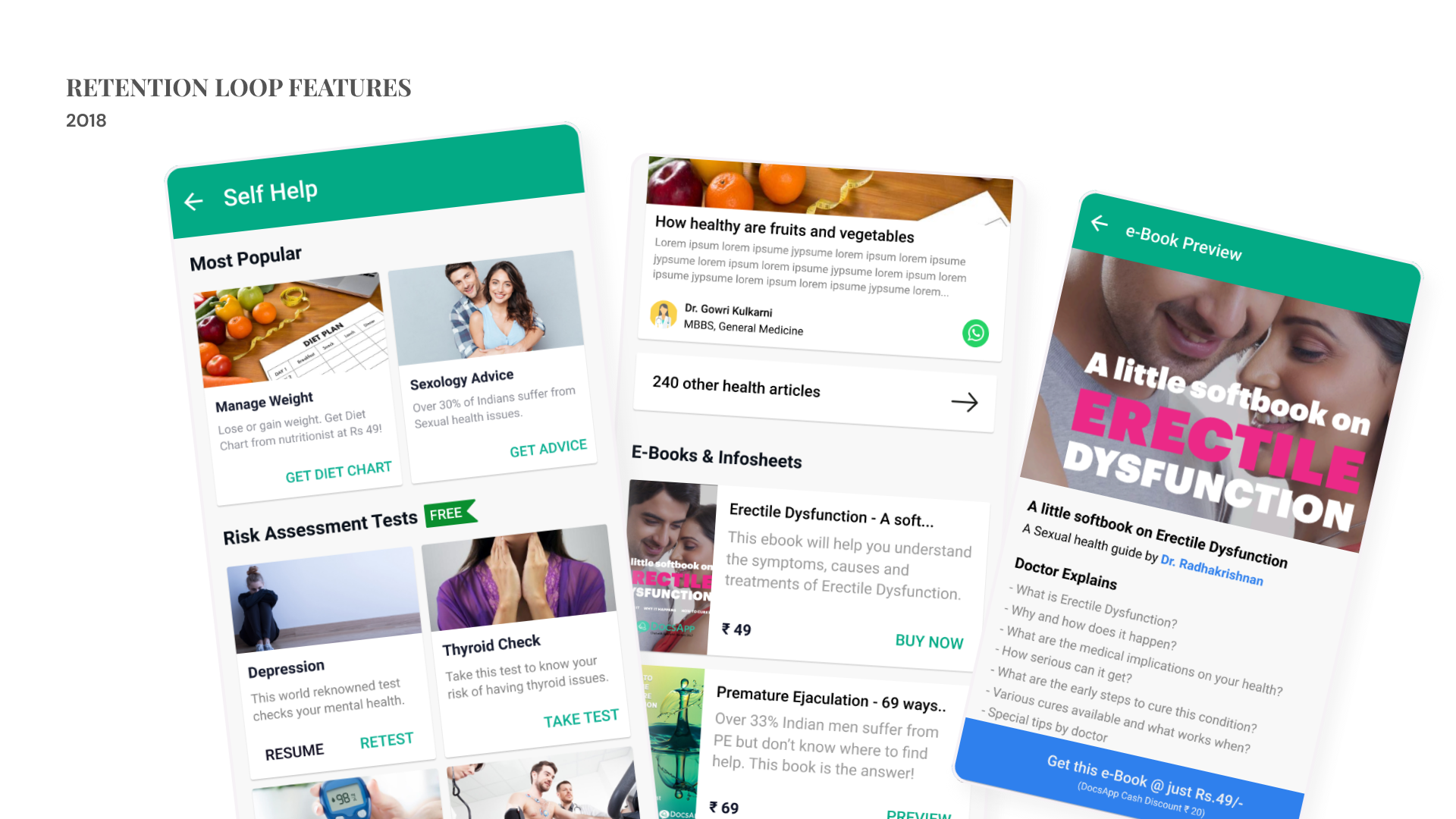
1. eBooks (₹49-59): Data-backed content on taboo health topics users won't discuss publicly but will read privately. Created in 5 languages. 64.3% conversion rate.

2. Self-Tests (Free): Chat-based health assessments (depression, thyroid, cardiac risk). Score-based CTAs: risky scores → consult doctor, medium scores → book checkup, safe scores → educational blogs. 4.7% conversion to online consultations.

3. Video Shorts (1-2 min): Led production of 1,500+ doctor-narrated videos in 5 languages. Teaser content addressing common & private health concerns. Drove installs and SEO via youtube and consultations (in-app videos as well), users related to problems, wanted professional guidance that was available instantly.

Lightweight, bite-sized, data-backed consumables targeted based on user behavior analysis. Almost nobody but the patient would know their private concerns, building trust through discretion (e-books/online consults). High hit rate because content matched actual user needs vs assumed needs.
Cart Psychology
Consumer Retail Parallel
Sincerely Health's 7-dimension Health Score creates engagement loops between transactions,nutrition assessments, sleep tracking, activity logging earn up to $180/year in grocery savings. Grocery frequency is 1-2x/week but food decisions happen daily. Lightweight content loops keep brand top-of-mind: recipe discovery with shoppable ingredients, meal planning tools, nutrition guides (Albertsons' Nutrition Insight Tool), seasonal produce guides. Educational content drives category discovery (specialty ingredients, prepared meals, organic sections) creating higher-value basket composition. Wellness actions converting to tangible grocery value mirrors healthcare's preventive care opportunity,reactive → proactive member engagement through longitudinal profiles.
💊 Case 3

R2C Reorder
Physical → Digital Innovation

Digitizing physical receipts into frictionless reordering , industry first, bridging offline to online

2.5x
Cashless Lift
8.7 Crores in 6M
Long term ₹100Cr feature ARR Target
45%→41.7%
Reimbursement Drop in 6M

45% of users submitted reimbursements for medicines, doctors, labs purchased offline. Their purchase data was trapped in physical receipts,photos, PDFs, handwritten prescriptions. When they needed to reorder chronic medications or repeat tests, they started from scratch every time. Clear repeat patterns, massive friction, revenue left on table.

Industry-first innovation: Digitize reimbursement receipts into ready-made reorder cards using OCR + human verification. Medicines from local pharmacy? Doctor visits? Lab tests? Pre-filled cart ready to reorder online with one tap.

Design challenge: Educate users on something nobody had done before (physical → digital conversion) under heavy tech & performance constraints. Solution: Clever scanning animation showing "receipt transforming into digital cart" during processing. Validated through customer calls and Hotjar behavior observation.

Positioning challenge: Couldn't get prime home screen real estate. Solution: Introduced bottom nav (with a purpose) ensuring second-best positioning. Brought together marketing & product designers, for a 360D seamless campaign narrative.

Data hygiene was critical. Initial conversion failures from dirty data, once cleaned, users easily identified medicines/doctors through focused design reflecting physical-world familiarity vs information overload. This feature widened the acquisition funnel and increased margins while keeping tech costs minimal due to design efficiency.

Design system paid dividends. R2C (Reimbursement-to-cashless) reorder launched, legacy flows (medicines, consultations) worked seamlessly alongside without disrupting UX. System ensured beautiful cohesion with individual services as upgrades rolled out.

Showcases the multi-service Reimbursement to Cashless "Reorder" Module

Consumer Retail Parallel
Most users have "implicit subscriptions",milk every 5 days, bread every 3 days, eggs weekly. Platforms make them manually rebuild carts. Digitizing purchase patterns (physical receipts like we did, or app history like Swiggy/Amazon "Reorder") into predictive restock creates competitive moat. Once grocery routine lives in system, switching costs are massive. Innovation: we built from physical-world data, bridging offline → online.
🛒 Case 4

Medicines Cart Psychology
Contextual Revamps

5.3% AOV lift through behavioral design , education over speed in trust-sensitive categories

5.3%
AOV Increase
1.2
Per-Order Items Lift
18%
More OTC Seen

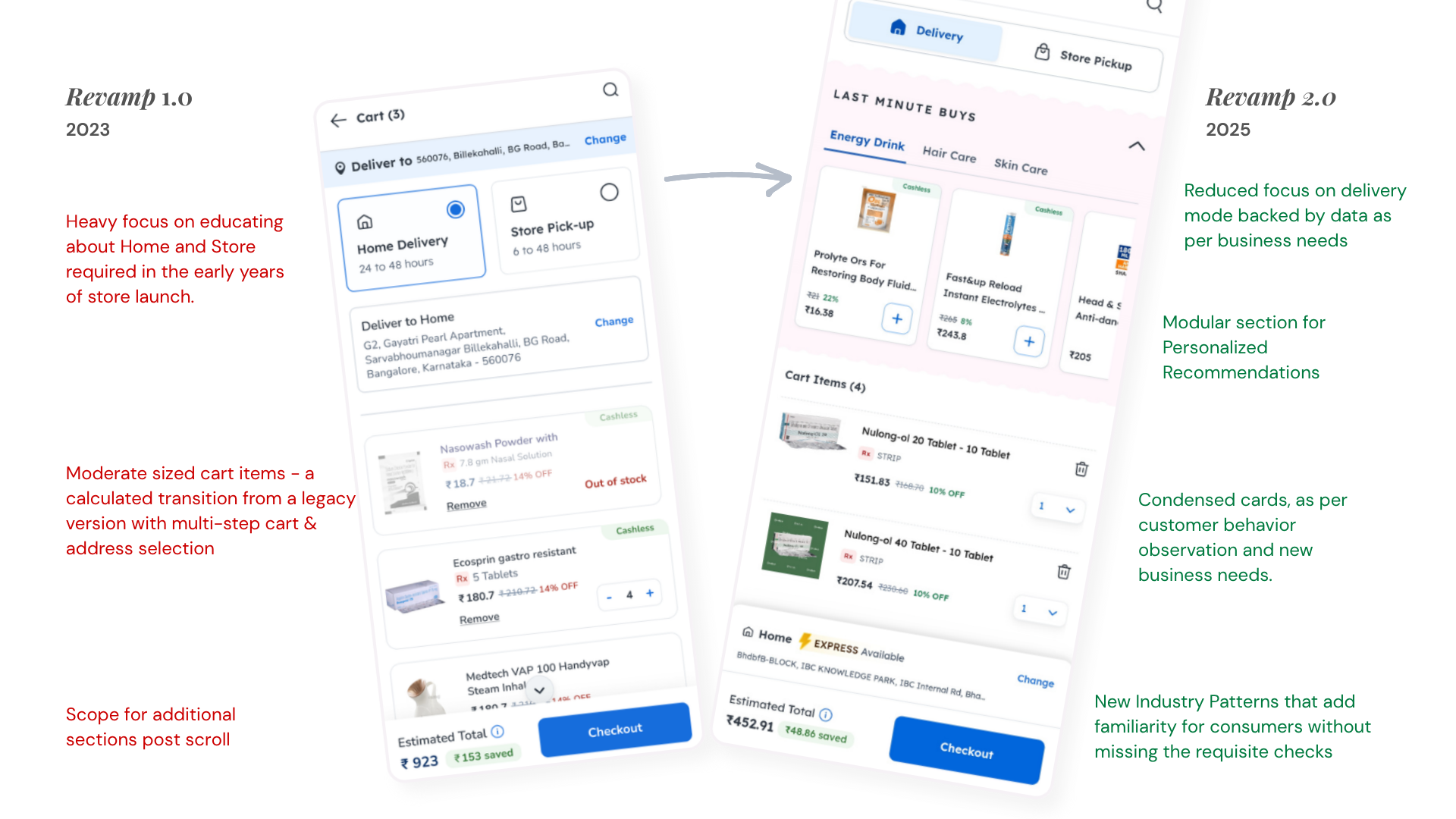
Pharmacy checkout being rebuilt for tech upgrade,risk of massive engineering effort with zero UX improvement. Meanwhile, users checked out with prescriptions only. 40% never saw OTC (over-the-counter) products below fold. AOV potential unmet.

Counter-intuitive bet: Healthcare doesn't push products. But understanding audience shift (benefits-driven employees vs anxious patients), we realized checkout conversion wouldn't suffer from strategic OTC placement as corporate users had to utilize their wallet money anyhow before expiry. Moved OTC above fold, 18% more users could now see them.

Behavioral insight: Data-driven recommendations for users for maximum relevance & impact. Positioned OTC as "complete your health routine" not upsell. Created impulse purchases without disrupting checkout,increasing AOV without hurting conversion.

Execution excellence: Fixed category naming (UX writing cleaned confusing terms), tested recommendations thoroughly, ensured data/tech/design worked in parallel.

Corporate Healthcare checkout psychology differs from general retail. Users are ok to add a few relevant out-of-pocket (payable) items if most of their cart is corporate sponsored. For retail login users this same modular section was placed below the cart. Audience acceptance confirmed AOV increase per transaction.

Cart Psychology
Consumer Retail Parallel
Loyalty points could mirror wallet psychology in an indirect fashion. Strategic friction through education ("frequently bought together," "complete your meal") converts better than speed. Behavioral economics work cross-culturally,execution differs.
🏥 Case 5

Walk-In Innovation
Offline-Online Bridge

Digital wallet for physical doctor visits , seamlessly using benefits at clinics, creating omnichannel healthcare

Industry
First in India
Unified
Offline + Online

Users booked consultations online but had no way to use their digital benefits when walking into physical clinics. Offline doctor visits seemed separate from the digital platform. This created fragmentation in the healthcare journey and limited benefit utilization.

Industry first: Create digital wallet integration allowing users to pay with benefits at physical clinic visits. Book online, walk in, pay with benefits seamlessly. Unified offline-online through wallet technology.

This unlocked the offline-online bridge,users could now access their entire benefits ecosystem regardless of whether they chose digital consultation or physical visit.

Healthcare is inherently hybrid,some conditions need in-person visits, others work digitally. By not forcing users to choose between digital convenience and physical care quality, we created true omnichannel healthcare. Benefits became portable across all touchpoints.

Consumer Retail Parallel
Grocery is increasingly omnichannel,users browse online, buy in-store, or vice versa. Digital wallet/loyalty integration across all touchpoints (app, website, in-store terminals, pickup locations) creates seamless experience. Same cart, same benefits, same pricing whether ordering for delivery or walking aisles. Portability of digital benefits to physical environments reduces friction in hybrid shopping journeys.
🧬 Case 6

NextGen AI Genetics
High-Ticket Education-First

Launching AI-powered genetic screening , education-led design for high-value health services

High-Ticket
New Revenue Vertical
AI-Powered
Genetic Screening

Genetic screening is complex, expensive, and poorly understood by consumers. Traditional approach: overwhelming users with scientific jargon, leading to drop-offs. High-ticket services require education before conversion, not after.

Education-first architecture: Don't sell genetic screening,teach users why they need it. Multi-step educational journey explaining: What is genetic screening? Who needs it? What can you learn? How does it work?

AI-powered personalization showing relevant genetic insights based on family history inputs. Progressive disclosure of complexity,start simple, deepen based on user engagement signals.

High-ticket health services compete on trust, not price. Education builds trust at scale. Users willing to pay premium once they understand value proposition. AI personalization made generic service feel individually relevant.

NexGen Services
Retail Parallel
Premium grocery or health product categories (organic, specialty, prepared meals) require education for conversion. Interactive nutrition guides, recipe inspiration, meal planning tools educate users on why premium matters. AI-powered meal recommendations based on dietary restrictions, family size, cooking habits make generic premium categories feel personally relevant, justifying price premium through individualized value.
🧭 Case 7

Service Discovery Hub
Platform Over Departments

Multi-service exploration page , solving home screen real estate wars while enabling rapid service launches

10%
DAU Engaging
₹50L+
Monthly Revenue
1 Week
Build Time

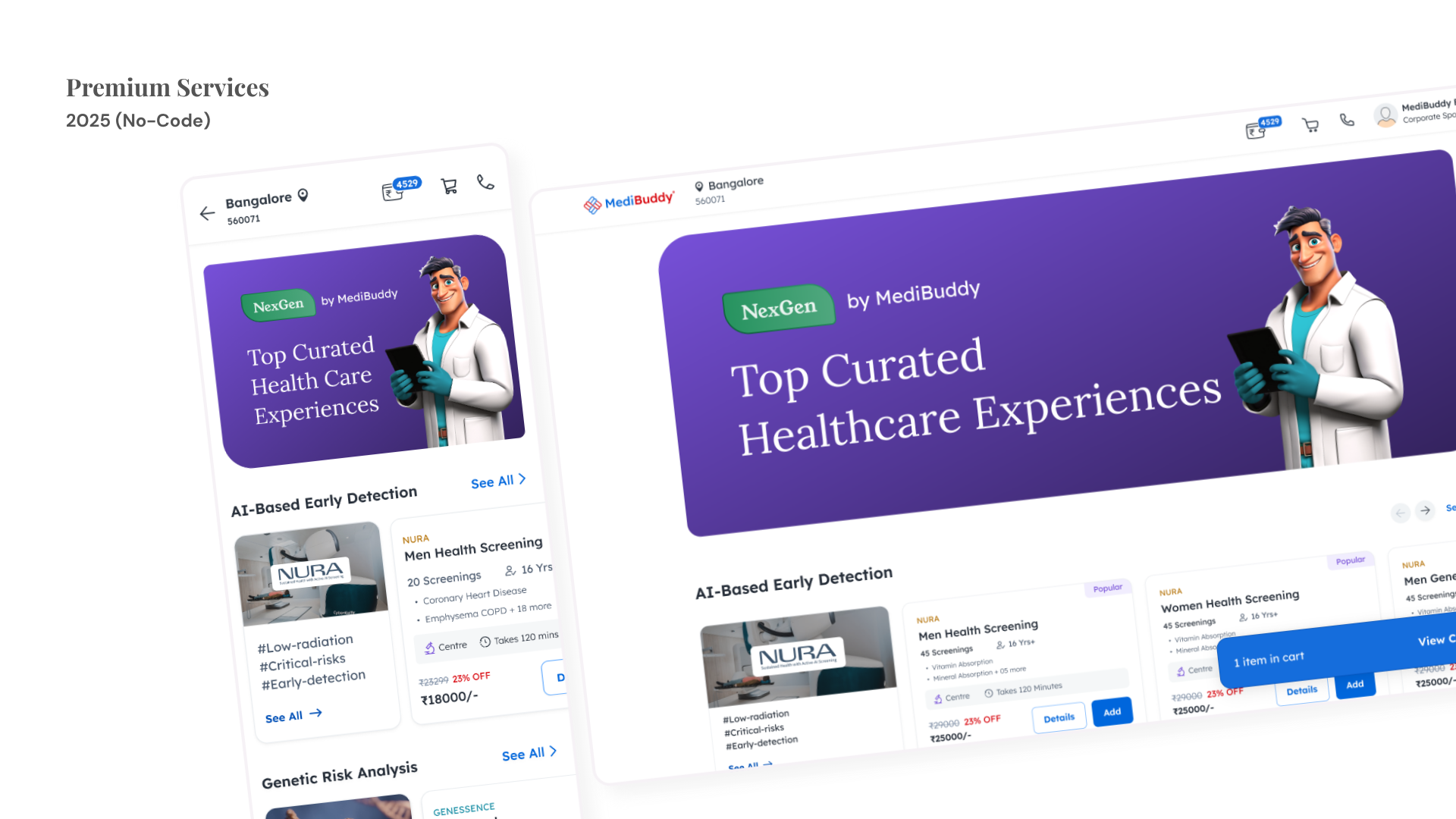
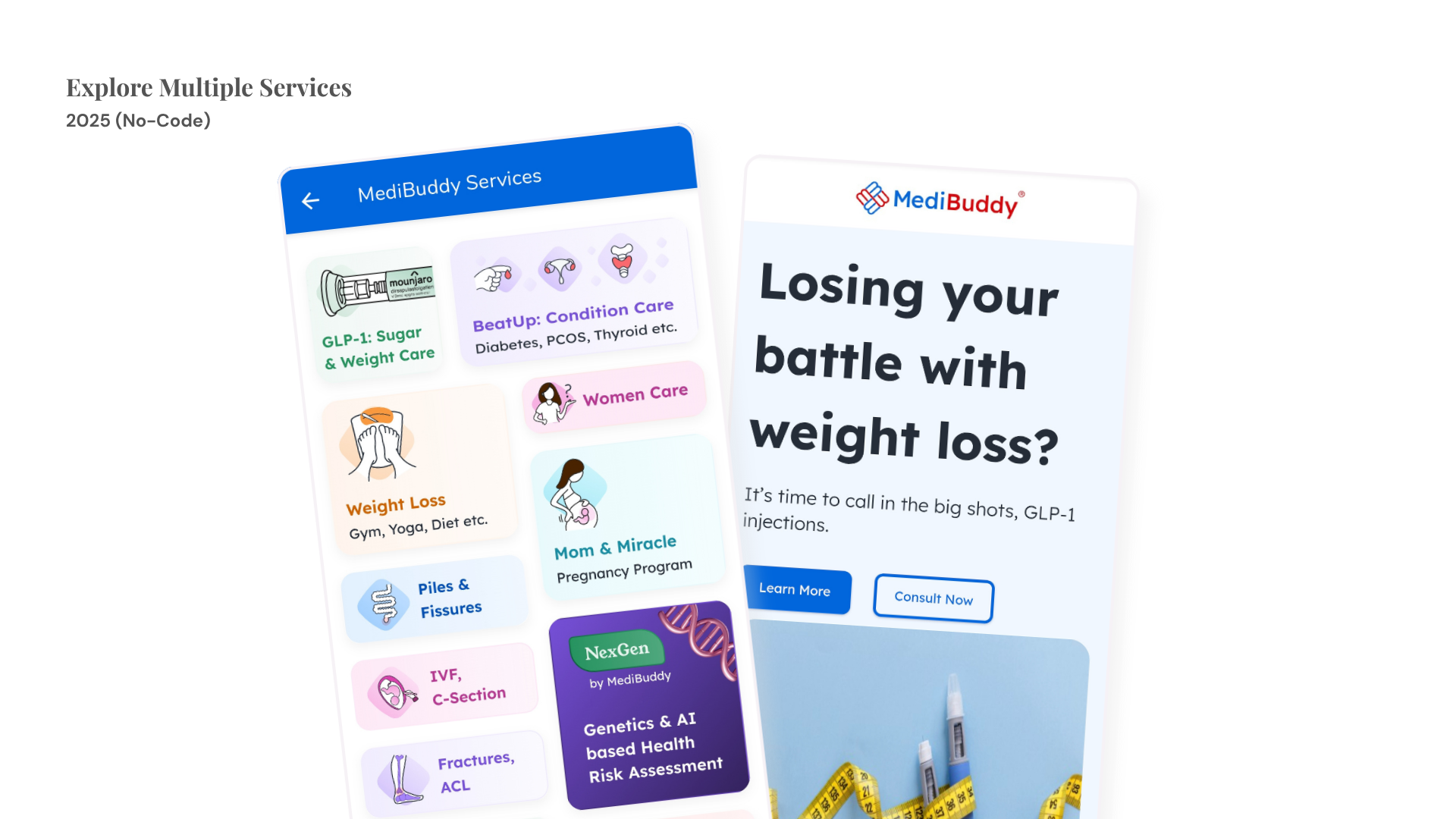
By 2025: 15-16 services/features on home screen. Cumbersome for users to identify core vs special services. Every department fighting for prime home screen real estate. High-ticket, high-margin services needed exposure. New service launches required months of implementation.

Multi-service hub instead of departmental wins. Refused individual page requests from business units. Built fast no-code explorer showcasing all new services + sub-categories of existing high-ticket services.

One step from home screen bottom nav → "Explore" page. Maximum visibility without cognitive overload. 10+ services visible on first fold. Built in one week (design + development, no core engineering).

Design differentiated from other pages,felt like discovery vs transaction. Users could browse & understand variety without cognitive load. Fast launch = reduced implementation cost, increased business value. One architecture serving multiple business units vs siloed solutions.

Cart Psychology
Consumer Retail Parallel
Multi-category retailers face same home screen wars,produce, meat, bakery, deli, pharmacy, floral all want prime placement. Solution: Dedicated "Discover" or "Shop by Department" hub enabling variety browsing without cluttering main shopping flow. Showcase seasonal items, specialty categories, prepared foods, new product launches in curated discovery experience. Fast no-code implementation enables rapid category expansion without app rebuild.
🎯 Case 8

Personalization
Modular Intelligence

Flexible home screen architecture , balancing business needs, personalization, and user experience under tech constraints

Modular
Reusable Architecture
Zero-State
First-Time Guidance
Smart-Nudge
Returning Users

Home screen limited by technical constraints. Multiple hacks to extract value from same tech infrastructure. Couldn't showcase benefits upfront properly. Promotional space needed (couldn't go below fold) while requiring personalized section. Balancing competing needs: business promos, user personalization, service discovery,all on constrained real estate.

Modular personalization architecture allowing variety of content from both marketing and product teams. Reactivated space-saving architecture built 2 years prior,freed up room for personalized section.

Flexibility across user states: Zero-state (no transactions) → suggested actions. Returning users → smart interventions (medicines, tests, consults, surgery planning) at right time. Extremely modular = low tech cost, high business flexibility, relevant user experience without jarring.

Personalization was subtle yet powerful. Family member names in minimal info reminding users of pending actions. Direct CTAs to service carts,friction removal. Same architecture serving multiple product categories = reusable investment vs one-off builds.

Retail Parallel
Grocery home screens face identical constraints,balancing promos, personalized recommendations, category discovery, seasonal highlights. Modular architecture enables: Zero-state users → guided category discovery. Returning users → "Buy again" + predicted restocks + personalized deals. Flexible system serves promotional needs (marketing campaigns, seasonal events) and personalization needs (dietary preferences, purchase patterns) through same reusable infrastructure,maximizing ROI on platform investment.
Highlights

Consumer Obsession
End-to-End Ownership
₹400Cr+ Design Impact

Design systems that work for users but also scale for the org.

Experiment, Fail Fast, Empathize with Team & Customers.